Cooking a steak that rivals your favorite high-end steakhouse is far easier than it seems. The secret lies in starting with exceptional butchery, understanding the unique personality of each cut, and mastering a few fundamental techniques.
Whether you are craving the rich marbling of a ribeye or the best-of-both-worlds appeal of a T-bone, here is your definitive butcher guide to achieving steakhouse perfection in your own kitchen.
Understanding Your Cuts: Ribeye vs. T-Bone
Before striking a match or heating a pan, it helps to know what makes these two legendary cuts special:
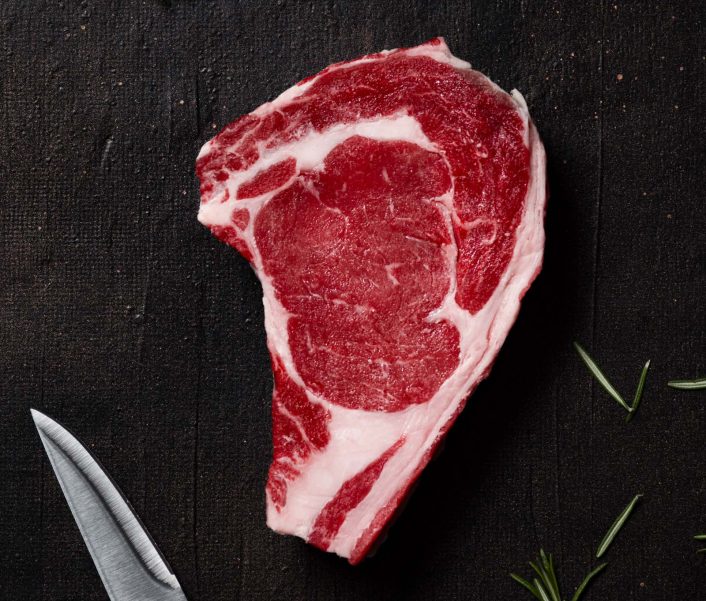
- The Ribeye: Cut from the rib primal section, the ribeye is famous for its generous intramuscular fat marbling and rich fat cap. As the meat cooks, this fat melts directly into the steak, delivering maximum tenderness, deep umami flavor, and incredible juiciness.
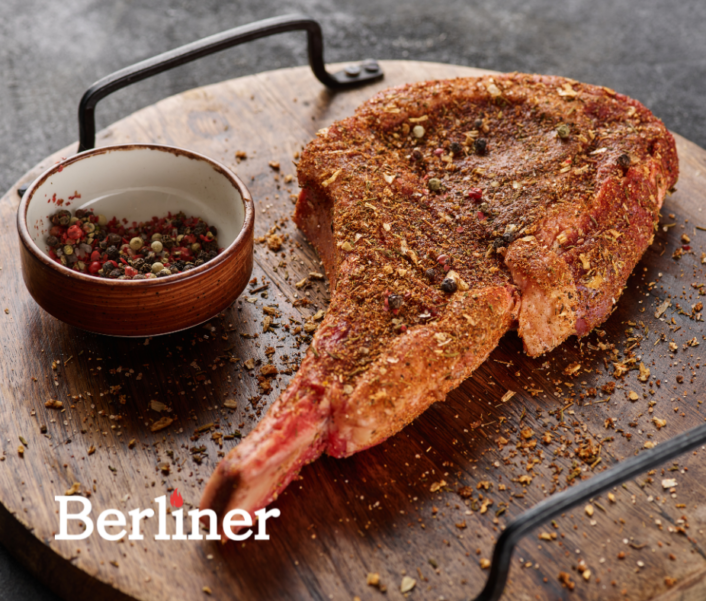
- The T-Bone: Featuring an iconic T-shaped bone down the center, this cut offers two distinct steaks in one. On one side sits a beefy, well-marbled strip loin (New York strip), and on the other, a soft, tender fillet. Cooking a T-bone requires a bit of care because the lean fillet cooks faster than the strip side.
Step 1: Preparation is Everything
To get a deep, flavorful crust and an evenly cooked center, follow these prep essentials:
- Bring It to Room Temp: Take your steaks out of the fridge 30 to 45 minutes before cooking. Putting a cold steak into a hot pan drops the cooking temperature instantly and leads to uneven cooking.
- Pat It Bone Dry: Use paper towels to thoroughly dry the surface of the meat. Moisture prevents proper searing and steams the meat instead of crusting it.
- Season Generously: Right before searing, coat all sides generously with coarse sea salt and freshly cracked black pepper. High-quality beef needs little else to shine.
Step 2: The High Heat Pan Sear Method
For a thick cut ribeye, pan searing with a butter baste produces unbeatable flavor.
- Heat a heavy cast iron pan until it is smoking hot, then add a high smoke point oil like canola or ghee.
- Lay the steak into the pan away from you. Let it sear undisturbed for 2 to 3 minutes until a golden-brown crust forms.
- Flip the steak and toss in a generous knob of real butter, smashed garlic cloves, and sprigs of fresh rosemary or thyme.
- Tilt the pan slightly and use a spoon to continuously baste the hot, foamy butter over the top of the steak.
Step 3: Mastering the T-Bone (The Reverse Sear)
Because T-bones are usually cut thick and feature two different muscles, the reverse sear works wonders.
- Bake the seasoned T-bone in a low temperature oven (around 120 degrees Celsius) until the internal temperature reaches about 10 degrees below your desired finish.
- Transfer the steak directly to a searing hot pan or open flame braai grid for 1 to 2 minutes per side to lock in a caramelized crust without overcooking the fillet portion.
Step 4: The Golden Rule: Rest Your Meat
Resist the urge to slice in immediately. Transfer your steak to a warm plate or cutting board and let it rest for 5 to 10 minutes. Resting allows the muscle fibers to relax and redistribute all the delicious internal juices throughout the meat rather than spilling onto the board.
Bring the Steakhouse Home
Ready to put your cooking skills to the test? Pop into Berliner today to hand select thick cut, beautifully marbled ribeyes and prime T-bones from our counter, or order online for fast local delivery straight to your doorstep.